

Pipe Reducing Machine or Tube Tapering Machine? Same Die, Different Job
Five names circulate for two different processes. What each machine does, and which one your part actually needs.
Read article →New: part library — 50 component families, 500 standard sizes, each with its own forming force, tip wall and cycle. Also: 300 taper geometries and company facts.
Articles on uniform conical taper forming, fork-shaft and ground-screw machine selection, and tube forming processes.
Founding year, five machine models with real capacity, the taper range 12.7–160 mm OD, materials and cycle time — one page, every figure traceable to the machine page it comes from.
Force, wall thickening, blank consumption, cycle time and die angle for every taper we quote. Pick the pair on your drawing and send it over.
Browse all 300 specsEight tube materials crossed with five size classes and twenty-five process decisions. Every page carries the force, pass count, tip wall, cycle time, die life and cost per piece for that exact geometry — not a range, a number you can check.
Open the case library250 real tube diameters and wall gauges crossed with eight materials. Every page gives the force, pass count, tip wall, springback, cycle, die life and cost for that exact part — not a size family.
Twelve shop-floor clips, 19 seconds each: tube in, cone out, measured. Every clip links to the guide that explains the number behind it.
 Straight Tube In, Cone Out — One P
 The Three Numbers on a Tube Taper
 What Actually Decides the Price of
 Send Three Things, Get a Tube Mach
 Why the Cheapest Tapering Machine
 60 mm Tube to a 38 mm Tip in 11 Se
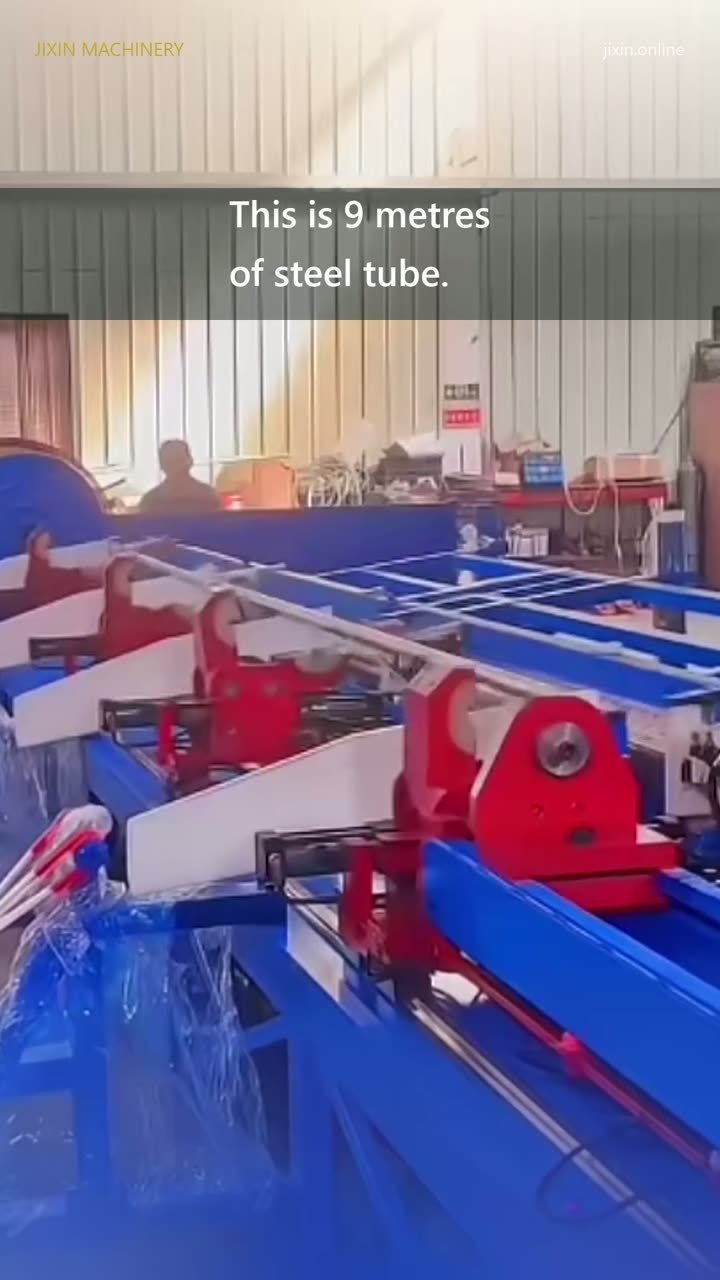 9 Metres of Steel Tube, Tapered in
 Hot Tube, Cold Die: 11 Seconds to
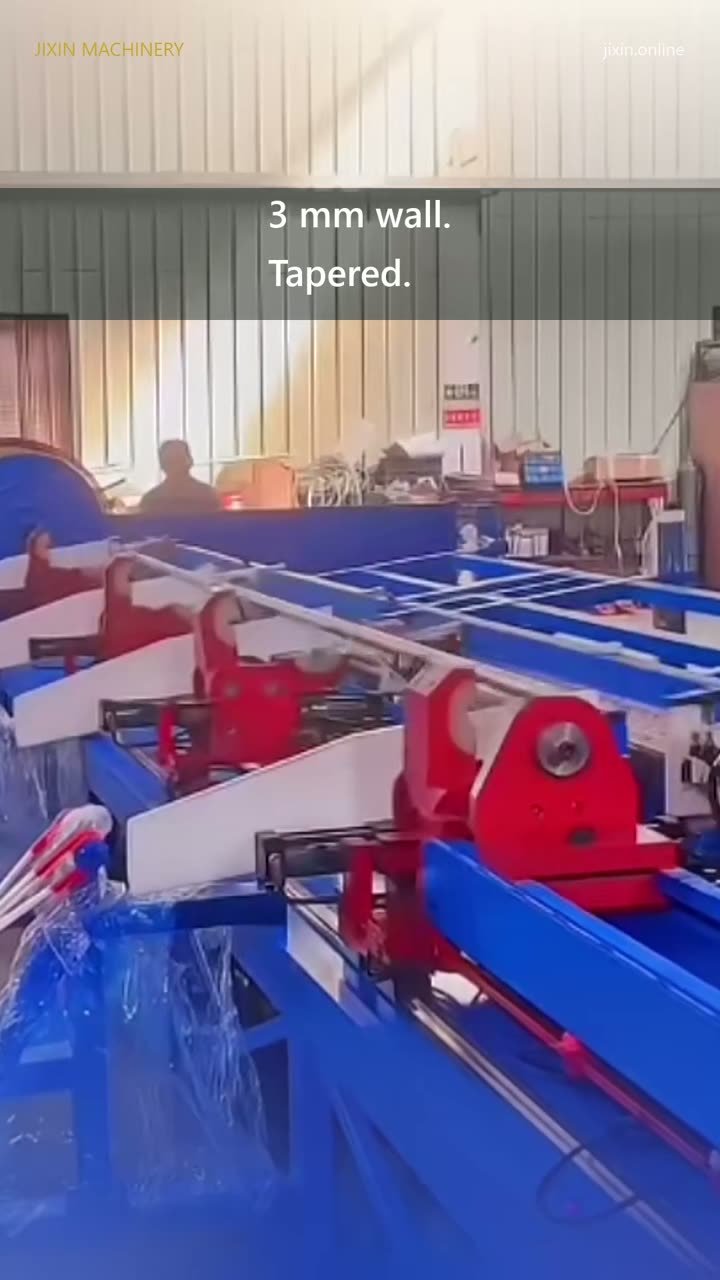 3 mm Wall Tube Tapered Without Wri
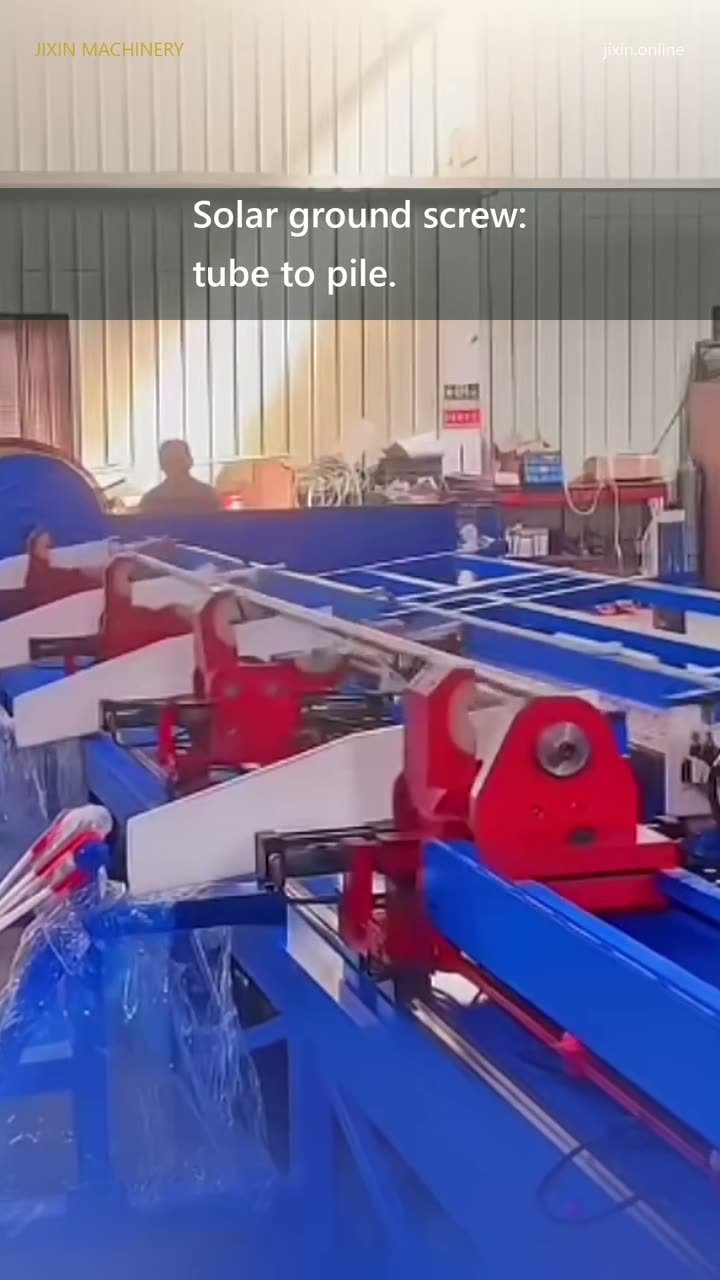 Solar Ground Screw: From Tube to F
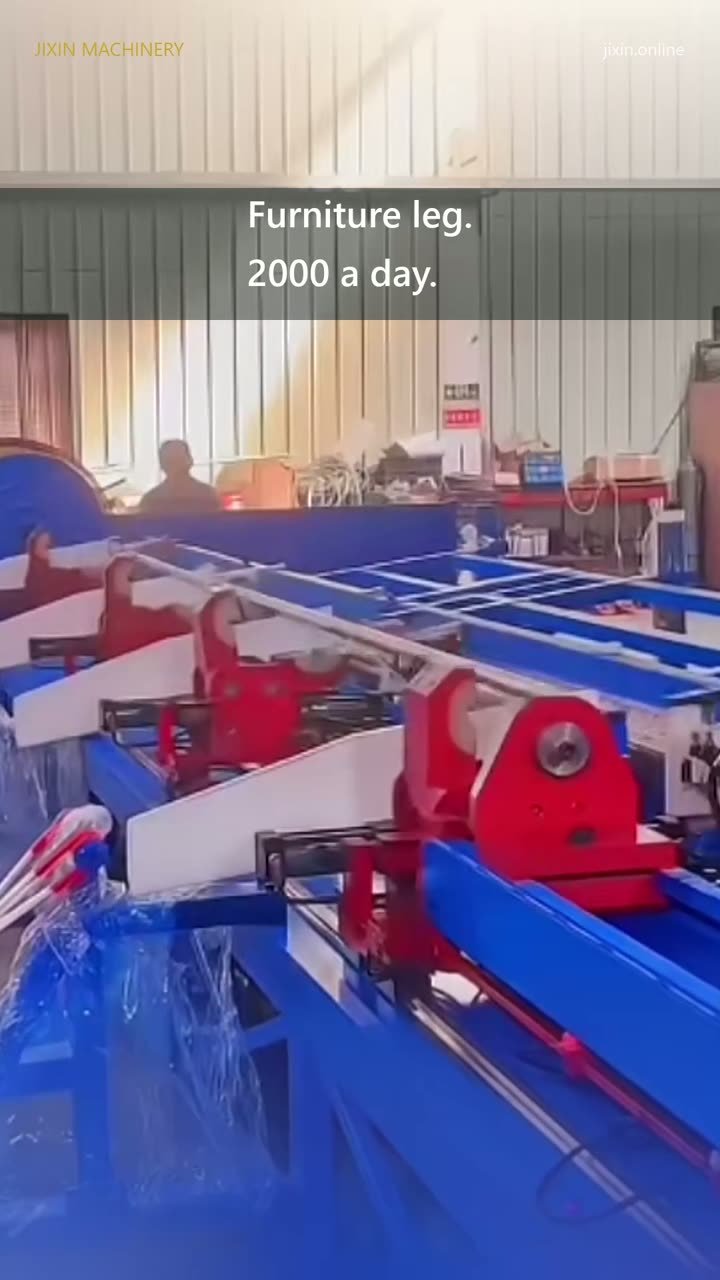 Furniture Leg Tapering: 2000 Piece
 The Die Is the Machine: What Decid
Four calculators and a reference table, built on the formulas used in the guides below. No sign-up, and every result shows the arithmetic behind it.
Ten task-oriented entry points into the library below. Each one groups the guides that answer a single buying or production question, in the order you would ask them.
Five names circulate for two different processes. What each machine does, and which one your part actually needs.
Read article →
From steel tube to finished helical pile: cutting, tip forming, helix welding, surface treatment, and the six tolerances that decide whether it drives straight.
Read article →
The one-piece fork shaft moved the quality problem to one operation. Where the wall thins, and why end heading fails there.
Read article →How to convert two diameters and a length into degrees, taper per foot or a 1:x ratio, with worked examples and the two mistakes that cause rejected parts.
Read article →
How tip angle and taper length decide driving torque, penetration in sand, clay and frozen ground, and the wall thickness to keep at the tip.
Read article →
A worked cost-per-piece example: labour, scrap, die cost and downtime, the break-even volume, and four things that quietly destroy the payback.
Read article →What e-bike and motorcycle fork shaft makers should verify before buying a tapering machine: taper uniformity, Ø320 capability, cycle time, tooling and service life.
Read article →Why a uniform conical taper and an end-headed tip are not interchangeable on fork shafts, how to tell them apart with three measurements, and what the wrong choice costs.
Read article →How to arrange the tapering and spiral welding stations, set buffer and manpower, control the four quality points and calculate real line capacity.
Read article →
Seven checks that separate a real machine builder from a trading company: build evidence, sample from your own tube, die life, spare parts, commissioning and terms.
Read article →How fully automatic ground screw taper forming machines improve dimensional consistency, labor efficiency and daily output for solar foundation manufacturers.
Read article →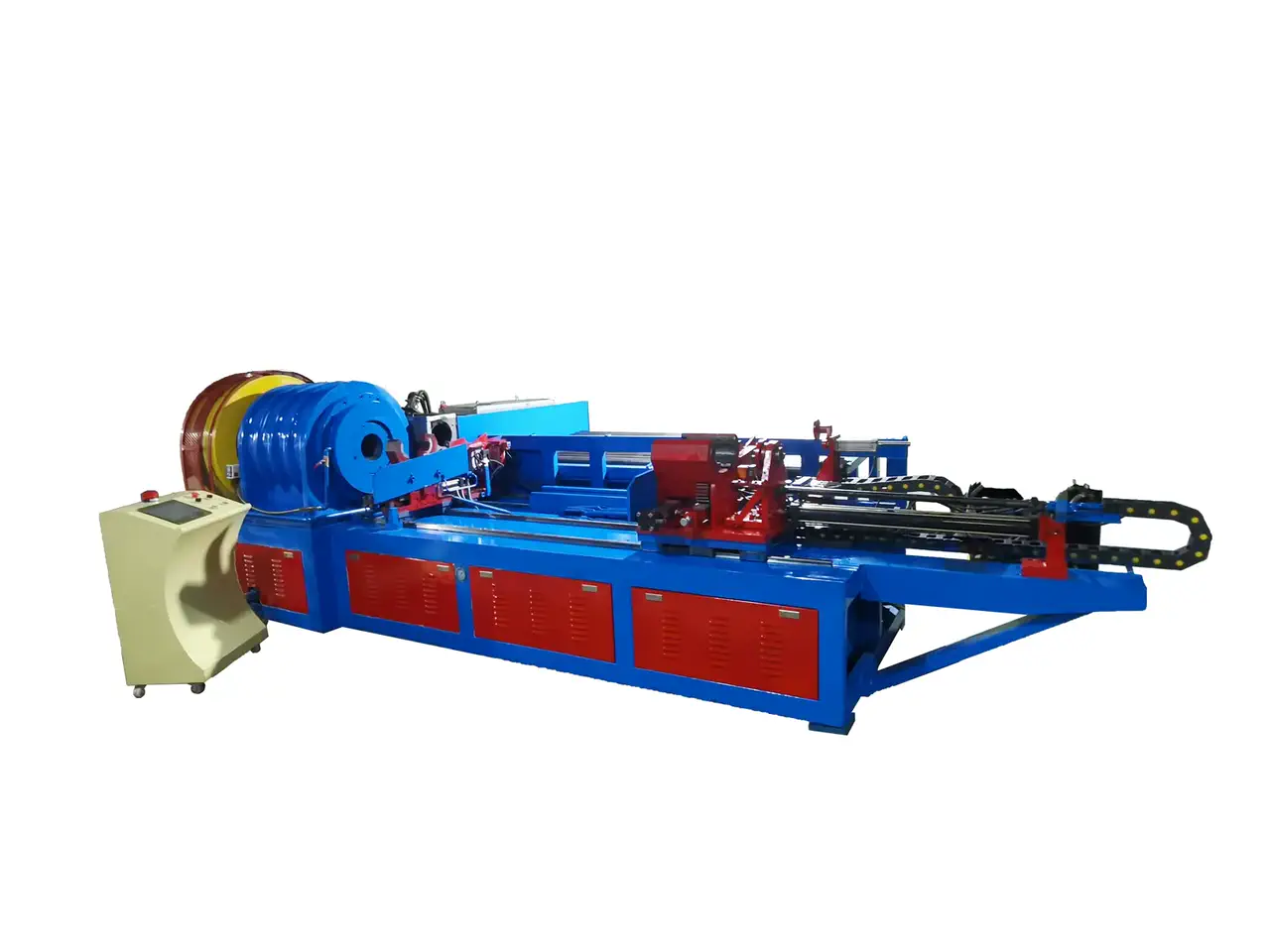
Intermediate-frequency heating and rotary forging taper the end of steel tubes for photovoltaic helical piles in one pass.
Read article →A heavy-duty pipe tapering and swaging machine delivering precision, fast cycle time and lower labor cost for solar foundation production.
Read article →
Rotary swaging machines with 4 or 6 dies produce long, smooth tapers for solar ground screws and other tubular parts.
Read article →Send the tube material, outside diameter, wall thickness, length and target shape. Our engineers will reply with a suitable configuration and quotation.
202 guides on tube tapering, rotary swaging, ground screws, tube cutting, tooling, cost and export practice. Written for buyers who need a number, not a brochure.